

Thoracic Anatomy
The human thorax or thoracic cavity is the second largest hollow in the body enclosed by twelve pairs of bones called ribs, and joined together in the front by another bony structure called a sternum (breast bone). This set of ribs (rib cage) is attached at the back to another set of small irregular-shaped bones called the spinal column (spine).
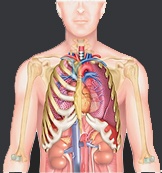
The thoracic cavity contains most of the body’s major organs and blood vessels. These include the heart, lungs, passageway for food from the mouth to the stomach (oesophagus), the middle and lower airways (tracheobronchial tree), vessels that carry blood between the lungs and the heart, a large artery that carries blood from the heart to other parts of the body and major veins that transport blood from the body to the heart. It also includes one of the organs of the immune system, the thymus.
Parts
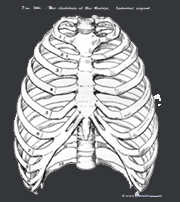 Ribs: Protects the major organs such as the heart and lungs and some great blood vessels in the thoracic cavity.
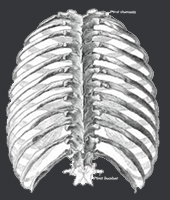 Sternum (Breast Bone): Protects the heart and holds the ribs in place at the front
- Spinal or Vertebral Column (Spine): Protects the spinal cord and is where the ribs meet at the back, completing the rib cage.
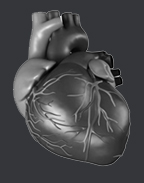 Heart: An hollow organ located in between the lungs just behind the breastbone. It supplies blood to all parts of the body. The pumping action is simultaneous, and any obstruction may cause heart attack or worse, stroke.
- Superior and inferior vena cava: Two large veins that transmit blood from the body to the heart.
 Pulmonary artery: A blood vessel that transports blood from the upper chamber of the heart to the lungs.
- Pulmonary vein: A blood vessel that transports blood from the lungs to the lower chamber of the heart.
- Aorta: The largest artery that carries oxygenated blood from the heart to all parts of the body.
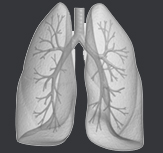
- Tracheobronchial tree: The middle and lower airways that allow air to pass from the nose or mouth to the lungs. It consists of the trachea (airway tube in the middle) and branches out into the left and right bronchi (the airway tube that goes into the left and right lungs), which further branches into smaller airway tubes called bronchioles.
- Lungs: An essential organ located on either side of the heart where the exchange of gases happens. The lungs receive oxygen from the environment, transporting it to the body, and take carbon dioxide from the body, then releases it to the environment.
 Oesophagus: It is a part of the digestive system, through which food passes from the pharynx to the stomach.
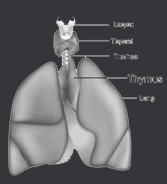 Thymus: A special organ of the immune system that fights foreign substances

 Multimedia
 Location and